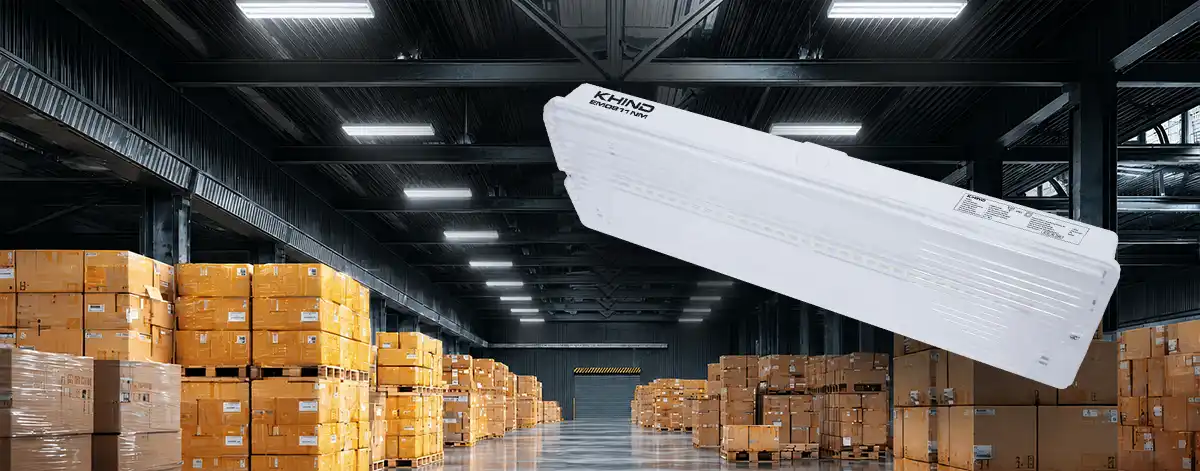
How to Choose the Right LED Lighting for Warehouses and Distribution Centres
In a busy warehouse or distribution centre, poor lighting can make picking, packing, loading, inventory checks, and equipment movement slower and less efficient. Dark spots, glare, uneven illumination, and frequent lamp failures can also create unnecessary safety and maintenance concerns. The right warehouse LED lighting should provide consistent illumination across large areas while keeping energy and maintenance requirements under control. This is particularly important for facilities that operate for long hours every day. From storage warehouses and logistics centres to manufacturing and distribution facilities, choosing the right warehouse lighting solutions can improve visibility, working conditions, and operational efficiency.
But with different lighting types, wattages, mounting heights, and beam patterns available, how do you know which option is right for your facility? This guide explains the key factors to consider and why LED High Bay lighting is often a practical choice for large warehouses.
| Lighting Type | Lighting Type | Key Advantage |
|---|---|---|
| LED High Bay | High-ceiling warehouses and distribution centres | Wide, powerful illumination for large spaces |
| LED Low Bay | Lower-ceiling storage areas | Effective lighting at shorter mounting heights |
| LED Linear High Bay | Long aisles and industrial spaces | Consistent illumination along rows |
| LED Panel Lights | Offices and administrative areas | Even, comfortable indoor lighting |
| LED Floodlights | Loading yards and outdoor areas | Broad-area outdoor illumination |
For large warehouses with high mounting heights, KHIND LED High Bay Lights can be considered as part of a properly planned warehouse lighting system.
7 Factors to Consider When Choosing Warehouse LED Lighting
Choosing a warehouse light should begin with the facility rather than the fixture. Consider these seven factors:
- Ceiling height: Higher ceilings require lighting designed to deliver sufficient illumination from greater mounting distances.
- Required illumination: Storage, picking, packing, and inspection areas may have different lighting requirements.
- Light output: Check the fixture's lumen output rather than judging brightness only by wattage.
- Beam angle: The right beam distribution helps direct light where it is needed and reduces dark areas.
- Energy efficiency: Efficient LED technology can reduce electricity consumption compared with older lighting systems.
- Durability: Warehouses need fixtures capable of handling dust, temperature variations, vibration, and long operating hours.
- Maintenance requirements: Long-lasting, reliable fixtures can reduce the frequency of replacements and maintenance work at height.
Why LED High Bay Lights Are a Smart Choice for Warehouses
LED High Bay lights are specifically designed for large spaces where fixtures are mounted at considerable heights. They combine high light output with controlled beam distribution, helping illuminate large floor areas without requiring a large number of individual fixtures.
For warehouses, logistics facilities, manufacturing plants, and distribution centres, this makes high-bay LED lighting a practical option for achieving consistent visibility across large working areas.
How to Calculate the Right Number of LED Lights
The number of lights required depends on more than the size of the warehouse. A basic lighting plan considers the floor area, target illuminance, fixture lumen output, mounting height, spacing, and light-loss factors.
A simplified starting formula is:
Required lumens = Floor area × Target illuminance
You can then estimate the number of fixtures using:
Number of fixtures ≈ Required lumens ÷ Effective lumens per fixture
For example, a warehouse measuring 1,000 m² that requires an average of 200 lux has a basic lighting requirement of:
1,000 × 200 = 200,000 lumens
If a selected fixture provides 20,000 effective lumens, a basic estimate would be:
200,000 ÷ 20,000 = 10 fixtures
This is only a preliminary calculation. A professional lighting design should also account for mounting height, beam angle, reflectance, spacing, obstructions, depreciation, and the actual activities performed in each area.
LED Lighting for Different Warehouse Zones
A warehouse does not necessarily need identical lighting everywhere. Different areas have different visibility requirements.
- Storage areas: Consistent illumination helps workers identify products and labels.
- Picking and packing zones: Better visibility supports accurate order handling.
- Loading and unloading areas: Strong, uniform lighting helps employees work safely around vehicles and equipment.
- Aisles: Appropriate beam distribution helps reduce shadows between storage racks.
- Inspection areas: Higher-quality illumination supports detailed visual tasks.
- Cold storage: Fixtures should be selected according to the environmental conditions of the space.
- Office and control areas: Panels or other commercial LED fixtures may be more appropriate than high bays.
A well-designed lighting plan therefore considers the entire facility rather than simply installing the same fixture throughout the warehouse.
LED Lighting Upgrade: What Should You Check Before Buying?
Before you buy LED warehouse lights in Dubai, review the following checklist:
- Warehouse floor area
- Ceiling and mounting height
- Required lux level
- Fixture lumen output
- Wattage and energy efficiency
- Beam angle and light distribution
- Colour temperature and colour rendering
- IP rating and environmental protection
- Operating temperature range
- Warranty and expected service life
- Installation requirements
- Availability of local technical support
For larger facilities, it is also worth requesting a lighting layout or photometric assessment before finalizing the purchase.
Common Mistakes When Choosing Warehouse LED Lights
A lighting upgrade can become inefficient when fixtures are selected based only on price or wattage. Common mistakes include:
- Choosing lights without considering ceiling height
- Focusing on watts instead of actual light output
- Installing too few fixtures to reduce upfront costs
- Installing too many fixtures without a lighting calculation
- Ignoring beam angle and creating uneven illumination
- Choosing fixtures unsuitable for dusty or demanding environments
- Overlooking maintenance and replacement access
- Replacing fixtures without checking the existing electrical setup
The cheapest fixture is not always the most cost-effective option. A properly designed system should balance performance, energy consumption, durability, and total ownership cost.
LED Warehouse Lighting vs Traditional Lighting
| Factor | Traditional Lighting | KHIND LED Warehouse Lighting |
|---|---|---|
| Energy efficiency | Generally lower | Generally higher |
| Light output | Can decline over time | Consistent when properly specified |
| Warm-up time | Some technologies require warm-up | Instant illumination |
| Maintenance | More frequent replacement may be required | Typically lower maintenance |
| Directional control | Varies by fixture | Better optical control available |
| Switching | May have limitations | Well suited to frequent switching |
| Operating cost | Higher energy demand in many applications | Lower energy demand when properly designed |
The actual performance and savings depend on the existing system, operating hours, electricity tariff, fixture specifications, and lighting design.
How Much Can Your Warehouse Save by Switching to LED?
Switching from traditional warehouse lighting to LED can reduce both energy consumption and ongoing maintenance costs, especially in facilities that operate for long hours. However, the actual savings depend on factors such as the existing lighting system, number of fixtures, operating hours, LED wattage, electricity rates, and maintenance requirements.
The potential savings come from:
- Lower energy consumption: LED lights generally use less electricity to produce the required level of illumination.
- Reduced maintenance costs: Longer-lasting LED fixtures can reduce frequent replacements and maintenance work.
- Lower cooling demand: LEDs typically produce less heat than many traditional lighting technologies, which can reduce the cooling load in some facilities.
- Better light output: Efficient light distribution can provide better illumination without unnecessarily increasing the number of fixtures.
- Lower long-term operating costs: Reduced energy and maintenance requirements can improve the overall cost-effectiveness of the lighting system.
Why Dubai Warehouses Should Consider Energy-Efficient Lighting
Warehouses in Dubai often operate for extended hours, making lighting a recurring operating expense. Large facilities also require substantial illumination across storage racks, aisles, packing stations, loading areas, and other operational zones.
This makes LED warehouse lighting Dubai solutions particularly relevant for businesses looking to improve lighting efficiency without compromising visibility. Energy-efficient fixtures can help reduce electricity demand, while durable LED systems can reduce the disruption associated with frequent lamp replacement.
For facilities searching for industrial LED lighting Dubai, the right solution should therefore be selected according to the warehouse's size, operating conditions, ceiling height, lighting requirements, and long-term maintenance needs.
Why Choose KHIND for Warehouse LED Lighting?
Selecting the right supplier is as important as selecting the right fixture. KHIND Solutions provides lighting solutions designed to support the needs of commercial and industrial environments, helping businesses approach warehouse lighting as a complete system rather than simply a product purchase.
KHIND's LED High Bay Lights can be considered for facilities that require powerful and consistent illumination across large areas. For businesses looking for a warehouse LED lighting company in Dubai, working with an experienced supplier can also provide value through product guidance, application planning, installation support, and after-sales assistance.
Whether you operate a logistics warehouse, distribution centre, manufacturing facility, storage unit, or another large commercial space, KHIND can help you evaluate the appropriate lighting approach for your facility.
Choosing the right warehouse lighting is ultimately about finding the balance between visibility, energy efficiency, durability, maintenance, and total operating cost. LED High Bay Lights are a strong option for large warehouses and distribution centres because they are designed to deliver high-output illumination from elevated mounting heights.
However, the right fixture alone does not guarantee the right result. Ceiling height, floor layout, required illumination, beam distribution, operating hours, and environmental conditions all need to be considered before installation.
If you are planning a warehouse lighting upgrade or looking to buy LED warehouse lights in Dubai, KHIND Solutions can help you identify a suitable lighting approach for your facility. Explore KHIND's LED lighting solutions and move toward a more efficient, reliable, and better-lit warehouse environment.
FAQ
LED High Bay Lights are generally well suited to warehouses with high ceilings because they provide high light output and broad coverage from elevated mounting heights. The final choice should depend on ceiling height, required illumination, layout, beam angle, and the activities performed in the space.
Are LED High Bay lights suitable for distribution centres?
Yes. LED High Bay Lights are commonly suited to large distribution centres because they can provide consistent illumination across storage, picking, packing, and operational areas. Proper fixture spacing and beam distribution are important for avoiding shadows and dark spots.
How many LED lights does my warehouse need?
The number depends on the warehouse area, target illuminance, fixture lumen output, mounting height, beam angle, and layout. A basic estimate can be made using floor area and required lux, but a professional lighting calculation provides a more accurate fixture count and layout.
Are LED High Bay lights energy efficient?
Yes. LED High Bay Lights are designed to produce substantial light output with relatively low electrical consumption compared with many older lighting technologies. Actual energy savings depend on the existing lighting system, LED fixture wattage, operating hours, electricity tariff, and lighting design.