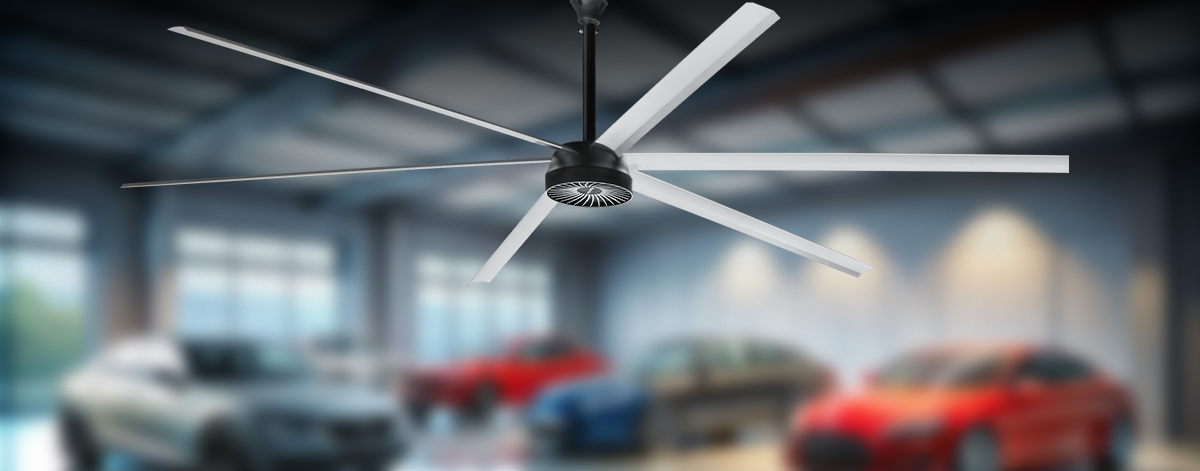
HVLS Fans for Car Showrooms: Enhancing Customer Comfort
You can spend thousands on high-end lighting, showroom staging, and sleek vehicle displays, but if the air inside feels heavy and warm, visitors won't stay long enough to make a deal.
Automotive showrooms are notoriously difficult to heat and cool efficiently. Between towering glass walls, vaulted ceilings, and service doors constantly opening, standard AC units struggle to keep up. That’s why dealership facility managers are installing HVLS Fans for Car Showrooms. Running at low speeds, these large-format fans create a consistent, gentle airflow that cools the floor without noise or high-power bills.
Challenges of maintaining comfortable temperatures in large automotive showrooms.
- Massive Open Layouts and Soaring Ceilings: Automotive showrooms are built with high ceilings and wide, open floor plans to showcase vehicles. Air naturally stratifies in these tall spaces warm air rises toward the ceiling while cooler air remains near the floor making uniform temperature control difficult.
- Large Glass Facades and Solar Heat Gain: Expansive glass walls and floor-to-ceiling windows create significant solar heat gain. Sunlight streaming through the glass rapidly warms the perimeter and floor areas, creating severe hot spots throughout the showroom.
- Frequent Door Openings: Customer entrance doors, large sliding glass panels, and service drive-in doors open frequently throughout the day. Every opening introduces hot, humid outside air (or cold air in winter), causing rapid indoor temperature fluctuations and humidity spikes.
- Heavy Overhead Lighting Loads: Showrooms utilize high-intensity spotlighting and extensive display lights to accentuate vehicle paint and features. These lighting systems generate substantial radiant heat, adding to the overall thermal load on the HVAC system.
- Air Stagnation in Specific Showroom Zones: Standard HVAC diffusers mounted high on ceilings often fail to push conditioned air all the way down to the occupied floor level, leaving air stagnant near display platforms and customer seating areas.
- High HVAC Operating Costs: Overworking traditional AC systems to overcome solar gain, high ceilings, and door cycles leads to extreme energy consumption, frequent system wear, and high utility bills.
Why premium dealerships are adopting HVLS fans as an energy-efficient solution.
- Lower Energy Bills: Destratify ceiling heat in winter (cuts heating costs 20%–30%) and create an evaporative breeze in summer (feels 4°F–8°F cooler, reducing AC load).
- Whisper-Quiet Operation: Direct-drive motors run under 45 dB, keeping sales conversations quiet and professional.
- Eliminates Moisture & Dust: Constant airflow prevents slippery "sweating" floors and protects pristine vehicle finishes from water spots and dust.
- Cools Service Bays Efficiently: Keeps technicians comfortable and clears exhaust fumes where air conditioning is impractical due to open bay doors.
- Sleek Aesthetics & Eco-Branding: Clean, modern designs fit luxury showroom architecture while running on minimal electricity (often under 1.5 kW).
Why Temperature Matters in Car Showrooms
In the UAE, temperature is more than a comfort factor, it's a key influence on customer experience and vehicle perception. With summer temperatures frequently exceeding 45°C and parked vehicles often becoming significantly hotter, maintaining the right showroom climate is essential. This is why many dealerships are investing in advanced Car Showroom Cooling Solutions to create a comfortable and inviting environment for customers.
1. Creates a Premium Customer Experience
Customers expect a comfortable environment when exploring high-value purchases. A well-cooled showroom encourages visitors to spend more time examining vehicles, speaking with sales teams, and considering upgrades. Integrating HVLS Fans for Car Showrooms with existing HVAC systems helps maintain consistent temperatures across large showroom spaces, enhancing the overall customer experience.
2. Showcases Vehicle Comfort Features
Air conditioning performance is a major buying consideration in the UAE. A temperature-controlled showroom allows customers to appreciate climate-control systems, ventilated seats, and cabin comfort without being distracted by extreme heat. Modern HVLS Fans UAE solutions help distribute conditioned air evenly, ensuring every corner of the showroom remains comfortable.
3. Protects Vehicle Interiors
Prolonged exposure to heat and UV radiation can accelerate wear on dashboards, leather, plastics, electronics, and display systems. Controlled indoor temperatures help preserve vehicle quality and presentation. Many dealerships rely on HVLS Fan Dubai installations to improve air circulation and support interior protection while reducing cooling inefficiencies.
4. Supports Longer Customer Engagement
When visitors are comfortable, they are more likely to stay longer, compare models, request test drives, and engage in detailed purchase discussions. The Best HVLS Fans for Car Showrooms create gentle, consistent airflow that enhances comfort without generating excessive noise.
5. Reinforces Brand Image
Luxury and premium automotive brands invest heavily in showroom environments. Consistent temperature control reflects professionalism, attention to detail, and customer-centric service. Well-designed Car Showroom Cooling Solutions contribute to a premium atmosphere that aligns with the brand's image and customer expectations.
6. Enables Better Staff Performance
Sales consultants can provide a more attentive and energetic customer experience when working in a comfortable environment, leading to more productive interactions. Solutions such as Macro-Air HVLS Fans Dubai help maintain a pleasant working environment by improving airflow and reducing temperature variations throughout the showroom.
Benefits of HVLS Fans in Car Showrooms
Clears Out "New Car" Chemical Odors: New cars release fumes from leather, plastics, and adhesives. Moving air keeps these odors from getting trapped in customer waiting areas.
Protects Leather & Car Interiors: Constant air movement keeps humidity steady, preventing high-end leather and trim inside display cars from cracking or warping in extreme heat.
Prevents Coastal Humidity Condensation ("Showroom Sweating"): In coastal areas of UAE, outdoor humidity hits 80%–90%. When this air leaks into a 21°C showroom, it instantly fogs cold car glass and forms dangerous water droplets on marble floors. Constant HVLS airflow stops moisture from settling and condensing.
Aligns with green Energy: HVLS fans run on direct-drive motors requiring under 1.5 kW of power, helping dealerships meet sustainability quotas and earn green building compliance points.
Cools Open-Air Service Delivery Bays & Valet Drop-offs: UAE luxury dealerships feature shaded outdoor/semi-outdoor handover zones and service reception bays where full AC installation is mechanically impossible. HVLS fans installed under high canopy roofs generate an evaporative cooling effect that makes outdoor ambient heat feel 6°C to 8°C cooler for arriving customers and valet attendants.
Where HVLS Fans Can Be Installed in Automotive Dealerships
HVLS fans can be strategically installed across multiple functional areas of a car dealership to improve air circulation, energy efficiency, and overall comfort.
| Dealership | Challenge | Function and benefit |
| Main Showroom Floor & Atrium | High ceilings (20+ ft) and glass facades trap ceiling heat and solar radiation. | Pushes trapped warm air down in winter and creates a quiet cooling breeze in summer. |
| Service Bays & Repair Workshops | Frequently open bay doors, engine heat, and stagnant vehicle exhaust fumes. | Flushes out toxic exhaust fumes and cools mechanics without costly central AC. |
| Customer Service Drive-Thru | Idling vehicles and cycling doors create heat pockets and carbon monoxide buildup. | Rapidly clears exhaust odors and keeps service advisors and arriving customers comfortable. |
| Customer Lounges & Cafes | High-traffic zones subject to temperature swings, drafts, and stale air. | Compact units (6–10 ft) normalize room temperature quietly (under 45 dB) for waiting guests. |
| Parts Storage Mezzanines | Multi-tier racks trap extreme heat at upper ceiling levels. | Circulates air vertically across all storage levels, maintaining consistent temperatures for staff. |
Why Car Dealerships Choose HVLS Fans Over Traditional Fans
| Feature | Traditional Fans (High Speed) | HVLS Fans (High Volume, Low Speed) |
| Coverage Area | Small & Concentrated: Covers ~200 to 400 sq. ft. directly beneath the blades. | Massive: A single fan covers up to 20,000+ sq. ft. across open showroom floors. |
| Movement Style | Turbulent & Fast: Creates high-velocity drafts (10–20+ mph) that blow papers and stir up floor dust. | Laminar & Gentle: Moves massive columns of air smoothly at low speeds (1–3 mph) for continuous cooling. |
| Noise Level | Loud (60–75+ dB): Fast motor whirring and blade chop disrupt sales consultations. | Whisper-Quiet (<45 dB): Direct-drive BLDC motors operate virtually silently. |
| Energy Efficiency | High Power Draw per Sq. Ft: Multiple small fans running simultaneously consume excessive wattage. | Ultra-Low Wattage: One unit runs on 1.0–1.5 kW (less energy than a hair dryer) while replacing up to 10–20 traditional fans. |
| Facility Aesthetics | Cluttered: Requires dozens of ceiling units or hazardous pedestal fans with trailing power cords on the floor. | Clean & Premium: Sleek, minimalist airfoil design that elevates modern glass-and-steel architecture. |
| Destratification Power | Ineffective: Cannot force trapped hot air down from ceilings higher than 12–15 feet. | Highly Effective: Easily pushes ceiling heat down from 20 to 50+ foot heights in winter. |
Choosing the Right HVLS Fan for Your Showroom
Selecting the right HVLS fan for a car dealership requires matching key physical specifications ceiling height, floor layout, noise threshold, and motor technology to the specific zone of the facility.
Motor Type - Gearless motors operate without oil or mechanical gears, keeping sound levels under 45 dB (whisper-quiet) and eliminating oil-leak risks over luxury cars.
Fan Diameter -Larger diameters cover broad floor areas at lower RPMs, providing gentle airflow without blowing brochures or window stickers.
Clearance Requirements - Ensures compliance with building safety codes, prevents lighting shadows (strobe effect), and stays out of the line of sight for elevated signage.
Ingress Protection (IP) - High IP ratings prevent dust, silica sand, and moisture from degrading motor electronics, especially near service doors or humid entrance bays.
Conclusion
Creating a comfortable indoor climate in an automotive showroom directly impacts customer satisfaction, dwell time, and overall brand perception. High-ceiling architectural designs and expansive glass walls create challenging heat loads that standard HVAC systems struggle to manage efficiently on their own.
By installing HVLS Fans for Car Showrooms, dealerships can maintain consistent indoor air circulation, reduce energy costs, eliminate hot spots, and present an inviting space for car buyers. Upgrading to Best HVLS fans for car showrooms provides a long-term, energy-efficient solution that pays for itself through operational savings and enhanced sales experiences.
FAQ’s
Why are HVLS fans ideal for car showrooms?
HVLS fans are ideal because they deliver massive air movement at very low speeds, creating a gentle, whisper-quiet cooling effect across large high-ceiling spaces without creating turbulent drafts, rustling papers, or disrupting showroom aesthetics.
Can HVLS fans work with existing HVAC systems?
Yes. HVLS fans are designed to complement central HVAC systems. By distributing conditioned air evenly throughout the facility and eliminating thermal stratification, they reduce the workload on AC units and allow thermostat settings to be adjusted higher, saving up to 30% on cooling costs.
Can HVLS fans be installed in luxury vehicle showrooms?
Yes. Premium brands frequently utilize sleek, direct-drive Macro-Air HVLS Fans Dubai installations. Modern HVLS fans feature refined industrial aesthetics, customizable color finishes, and virtually silent gearless motors that integrate into high-end architectural settings.